STCW
Personal Survival Techniques
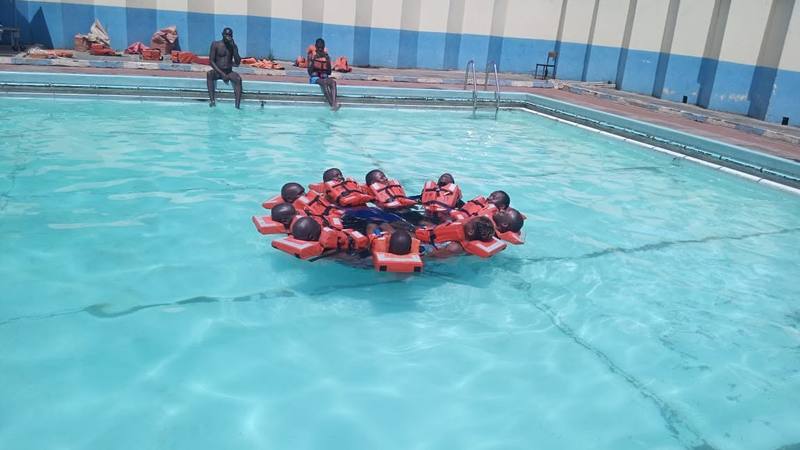
Know exactly what to do if you ever have to abandon ship. Certificate: STCW certificate of proficiency, Personal Survival Techniques.
Fee on requestView details
The mandatory safety ticket for every seafarer, done in ten days.
STCW certificate
Every person employed on a seagoing ship must hold STCW basic training under Regulation VI/1 of the STCW Convention. This programme delivers all four mandatory courses in one ten-day block, built against the Kenya Maritime Authority curricula and the 2026 amendments to the STCW Code (IMO Resolution MSC.560(108)).
Theory is studied online on the KIMARCE learning platform, at your own pace and on your phone. Practical sessions (sea survival, live fire, first aid and emergency drills) then take place in person at our Kisumu training grounds.
The certificates are the entry ticket for work on international merchant ships, cruise ships, offshore vessels and larger lake vessels, and they are needed before you can progress to rating or officer training.
17.5 hours. Abandoning ship, lifejackets and immersion suits, liferafts, survival at sea and helicopter rescue. STCW Table A-VI/1-1.
17.5 hours. The chemistry of fire, prevention, extinguishers, breathing apparatus and a live-fire practical. STCW Table A-VI/1-2.
15 hours. Casualty assessment, resuscitation, bleeding, shock and burns when help is hours away. STCW Table A-VI/1-3.
15 hours plus the new 2026 module on preventing violence and harassment. STCW Table A-VI/1-4.
Swimming is not required. The survival course includes a non-swimmer pathway, and a confidential water-confidence declaration lets instructors plan supervision.
Short quizzes on the online platform after each module (pass mark 70 percent).
Practical assessments marked competent or not yet competent against KMA checklists.
A final written paper for each course, then certification in line with KMA requirements. STCW basic training is refreshed every five years.
Certificate: STCW Basic Safety Training certificates (Regulation VI/1).
Know exactly what to do if you ever have to abandon ship. Certificate: STCW certificate of proficiency, Personal Survival Techniques.
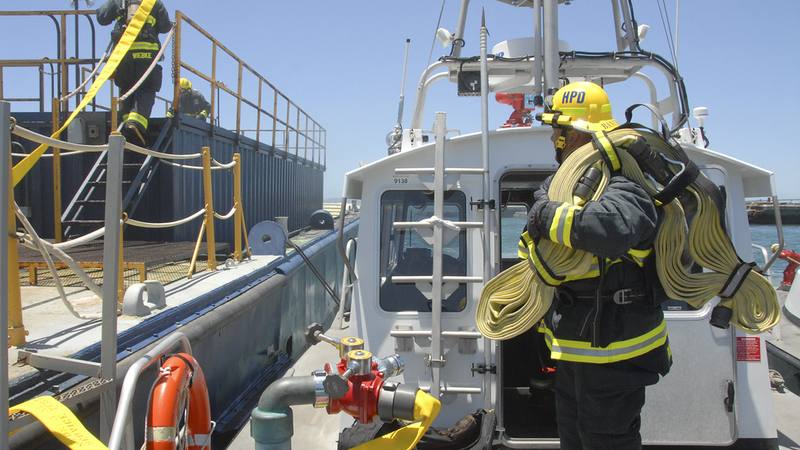
At sea there is no fire brigade coming. The crew is the fire brigade. Certificate: STCW certificate of proficiency, Fire Prevention and Fire Fighting.
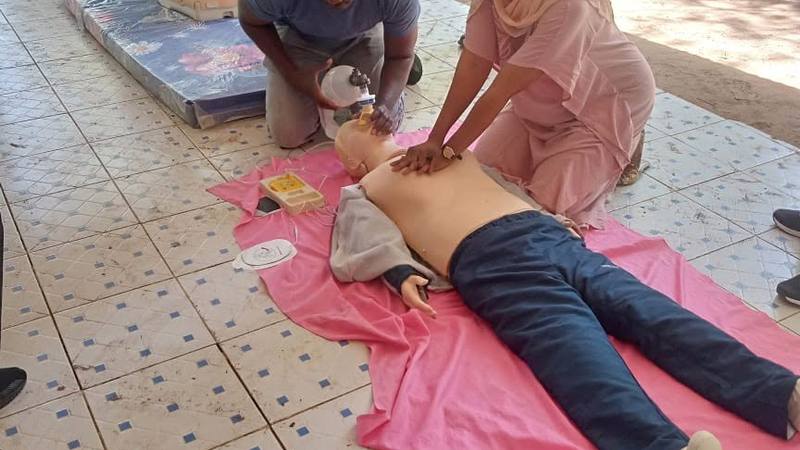
At sea, help is hours away. The first minutes are yours. Certificate: STCW certificate of proficiency, Elementary First Aid.